

Barcelona: Your Complete Guide to Discovering Catalonia’s Captivating Capital
By Yvan Junior Blanchette | Travel & Cruise Specialist | ÆRIA Voyages & Cruises

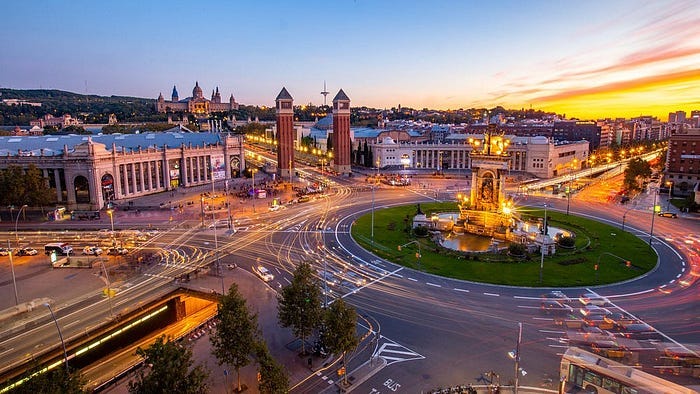
Barcelona is the rare city that seems to offer everything a traveler could hope for. Sunshine and Mediterranean beaches. World-class art and architecture. Vibrant culinary traditions. A festive atmosphere balanced by centuries of history. And above all, a distinctive Catalan character that sets it apart from the rest of Spain.
It is a destination that enchants many different kinds of travelers. History lovers wander its medieval streets. Architecture enthusiasts admire its bold modernist masterpieces. Food lovers indulge in markets and tapas bars that feel timeless. Others simply come for the pleasure of slow afternoons on terraces overlooking the sea.
But Barcelona is far more than the postcard version many visitors imagine. It is not just the Sagrada Família, a glass of sangria, and a stroll down Las Ramblas.
Barcelona is a living city—vibrant, colorful, sometimes surprising, always captivating. It is a place that is felt as much as it is seen.
My name is Yvan Junior Blanchette, and as a travel and cruise specialist, I enjoy helping travelers experience destinations in a deeper and more meaningful way. In this guide, I invite you to discover Barcelona beyond the obvious highlights, with practical advice, curated experiences, and ideas for building a memorable itinerary—whether as a standalone trip or as part of a Mediterranean cruise.
A Brief History of Barcelona
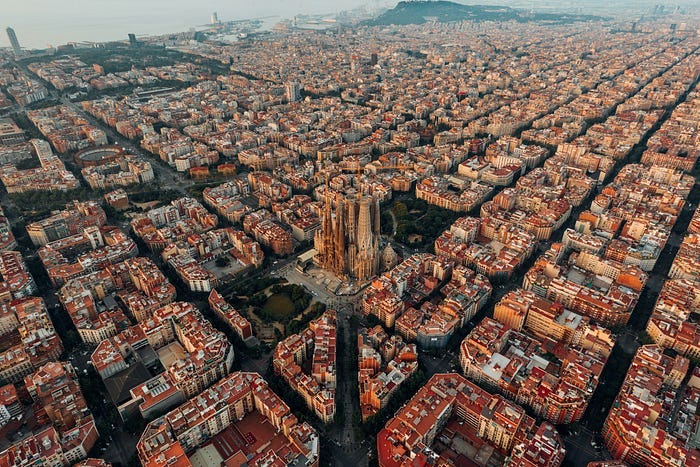
Barcelona is a city where history reveals itself at nearly every turn. Roman ruins sit beside medieval streets. Gothic cathedrals stand not far from avant-garde architecture. Each era has left its mark on the city.
The city began as a Roman settlement known as Barcino. Today, traces of that early period can still be seen in the Gothic Quarter, where fragments of Roman walls and foundations remain embedded within the urban landscape.
During the Middle Ages, Barcelona grew into a powerful maritime and commercial center. As part of the Crown of Aragon, it played a major role in Mediterranean trade. Many of the city’s impressive Gothic buildings date from this prosperous period.
The late nineteenth and early twentieth centuries brought a new transformation. Barcelona became the epicenter of the Catalan Modernisme movement, an artistic and architectural renaissance that sought to express Catalan identity and creativity.
The most famous figure of this movement was Antoni Gaudí, whose imaginative designs reshaped the city’s skyline.
Today, Barcelona remains the cultural heart of Catalonia. Its strong regional identity is reflected in its language, traditions, cuisine, and artistic heritage.
Must-See Highlights of Barcelona
Barcelona is filled with iconic landmarks, fascinating neighborhoods, and beautiful public spaces. These are the places that truly capture the spirit of the city.
The Magic of Gaudí
No conversation about Barcelona is complete without Antoni Gaudí.
His visionary architecture transformed the city and continues to define its visual identity.
Some of his most celebrated works include:
La Sagrada Família
The most visited monument in Spain and one of the most extraordinary churches in the world. Construction began in 1882 and continues today, making it both a historic masterpiece and a living work of art.
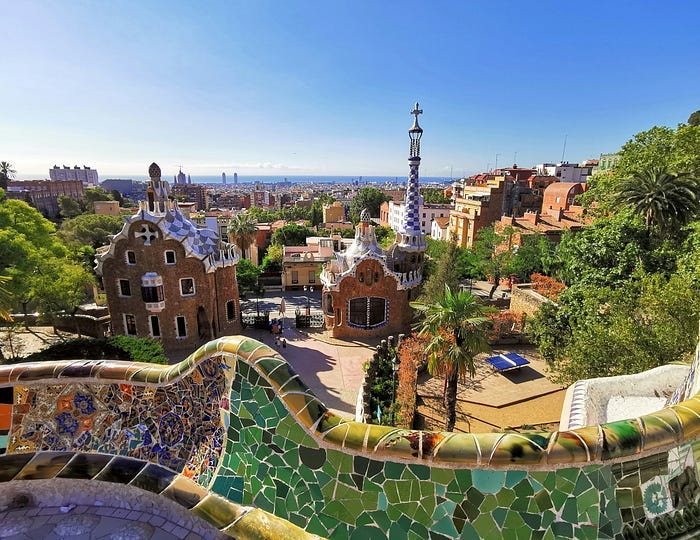
Park Güell
A whimsical hillside park filled with colorful mosaics, sculptural forms, and sweeping views over Barcelona.
Casa Batlló and La Pedrera (Casa Milà)
Two modernist masterpieces along the elegant Passeig de Gràcia boulevard, where Gaudí’s imaginative forms and flowing lines challenge traditional architectural conventions.
Exploring Gaudí’s creations is like stepping into a dream shaped by stone, light, and imagination.
The Gothic Quarter
The Barri Gòtic, or Gothic Quarter, forms the historic heart of Barcelona.
Here, narrow medieval streets twist through ancient stone buildings, opening suddenly onto quiet plazas and hidden courtyards. The atmosphere feels timeless.
Highlights include:
• Barcelona Cathedral
• Plaça Reial
• remnants of Roman walls
• charming artisan boutiques and cafés
Wandering this district without a strict plan is often the most rewarding approach.
Las Ramblas and La Boqueria Market
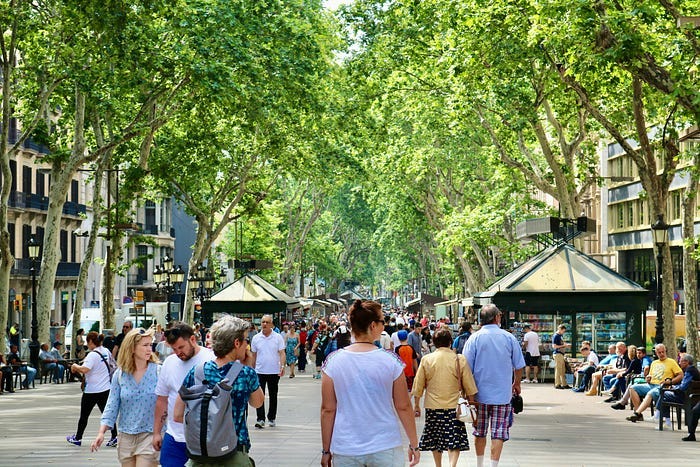
Las Ramblas is Barcelona’s most famous promenade, stretching from Plaça de Catalunya to the waterfront.
The boulevard is lively, animated, and full of energy. Street performers, cafés, and flower stalls line the walkway.
At its center lies Mercat de la Boqueria, one of Europe’s most celebrated food markets.
Inside, vibrant displays of fruit, seafood, cured meats, and local delicacies create an atmosphere that feels both festive and authentic.
Even a short visit offers a wonderful introduction to the city’s culinary culture.
Montjuïc and Its Spectacular Views
Rising above the city near the harbor, Montjuïc Hill offers one of the most scenic perspectives of Barcelona.
This area combines cultural institutions, gardens, and historic sites.
Visitors will find:
• Montjuïc Castle
• the Magic Fountain
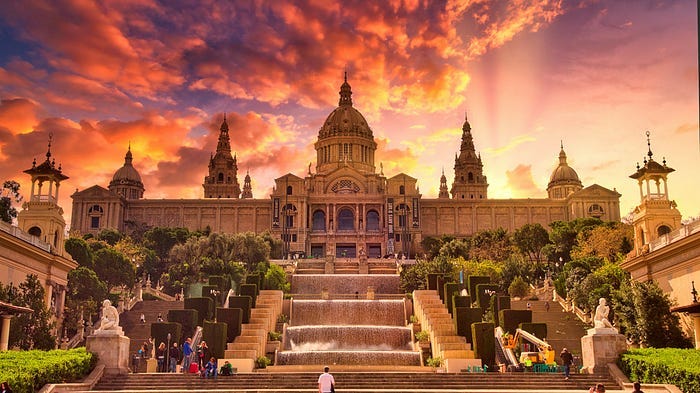
• the National Art Museum of Catalonia (MNAC)
• the Joan Miró Foundation
One of the most enjoyable ways to reach the summit is by cable car, which glides gently above the hillside gardens and former Olympic venues.
From the top, the panoramic views across the city, the port, and the Mediterranean are simply breathtaking.
Barcelona’s Seaside
Few European cities combine urban culture with beach life as effortlessly as Barcelona.
The waterfront offers several distinct areas:
Barceloneta Beach – lively and energetic, perfect for people-watching and seaside dining.
Bogatell and Nova Icària – quieter and more relaxed beaches.
Port Olímpic – a stylish marina district with restaurants, lounges, and nightlife.
Whether you prefer a morning swim or an evening stroll along the promenade, the sea is always part of Barcelona’s atmosphere.
Catalan Culture in Everyday Life
Barcelona possesses a deeply rooted identity that is distinctly Catalan.
Both Catalan and Spanish are spoken throughout the city, and many cultural traditions reflect this regional heritage.
Some of the most fascinating local traditions include:
Sant Jordi Day
Every April, the city fills with book stalls and roses as people celebrate literature and love.
Castellers
Teams construct remarkable human towers, sometimes reaching several stories high.
The Festival of Gràcia
Each summer, residents decorate entire streets with imaginative artistic displays.
Barcelona also has a rich artistic legacy. Famous figures such as Pablo Picasso and Joan Miró spent important parts of their careers here, and their works can be admired in museums throughout the city.
Experiencing Barcelona Through Its Cuisine
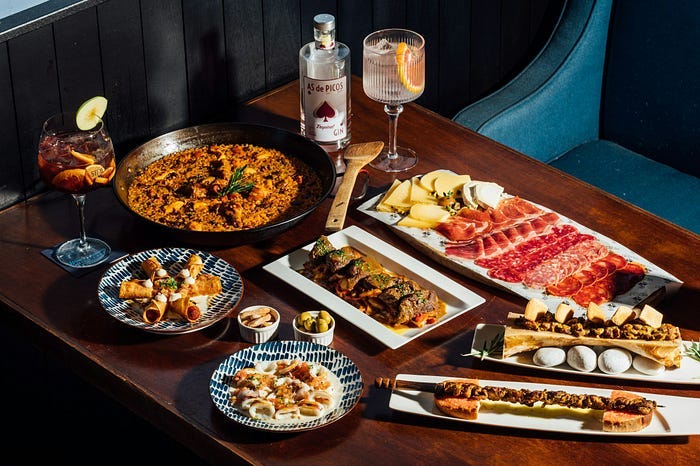
Catalan cuisine is generous, flavorful, and deeply connected to the Mediterranean.
Some dishes worth trying include:
• patatas bravas
• croquettes
• Iberian ham
• seafood paella
• escudella (a traditional Catalan stew)
• grilled calçots during their seasonal harvest
Food markets provide an excellent introduction to local gastronomy.
Top markets include:
• La Boqueria
• Mercat de Sant Antoni
• Mercat de Santa Caterina
To accompany your meal, consider sampling:
• cava (Catalonia’s sparkling wine)
• wines from the nearby Penedès region
• traditional vermouth served as an aperitif
Planning Your Visit to Barcelona
When to Visit
Spring and autumn generally offer the most pleasant weather and fewer crowds.
Summer brings lively energy but also larger visitor numbers.
Winter is mild and can be a wonderful time to experience a quieter, more relaxed Barcelona.
Getting Around
Barcelona’s transportation network is efficient and easy to navigate.
Options include:
• a fast and reliable metro system
• buses and trams
• the Hola Barcelona transit pass for unlimited travel
Many central neighborhoods are also perfect for exploring on foot.
Where to Stay
Different areas of the city offer different atmospheres.
Eixample – elegant and centrally located
Gràcia – bohemian and local
Barceloneta – near the beach
Gothic Quarter – historic and atmospheric
Recommended Experiences in Barcelona
To deepen your experience, consider activities such as:
• a guided tapas and wine walking tour
• a city tour by eco-friendly tuk-tuk
• a walking tour of Las Ramblas and Gaudí’s architecture
• a skip-the-line guided visit to the Sagrada Família
Excursions Beyond the City
If your schedule allows, the surrounding region offers wonderful day trips.
Costa Brava – dramatic coastal landscapes and crystal-clear waters.
Montserrat – a striking mountain monastery reached by scenic rail or hiking trails.
Girona or Sitges – charming historic towns easily reached from Barcelona.
A stay of three to five days allows visitors to experience the highlights of Barcelona, while a week provides time to explore the surrounding region.
🧳Traveler’s Quick Reference
Currency: Euro (€)
Languages: Catalan and Spanish; English widely spoken in tourist areas
Electricity: Type F outlets, 220 V
Public transit: Metro runs roughly 5 AM to midnight (all night on Saturdays)
Safety: Be mindful of pickpockets in busy areas
Emergency number: 112
Final Thoughts
Barcelona is a city that rewards curiosity.
Its architecture, cuisine, beaches, and traditions combine to create an atmosphere that feels both sophisticated and welcoming.
Three days may provide a glimpse of its charm, but a longer stay reveals its many layers.
And if you would like to experience Barcelona in the most seamless and enjoyable way possible, I would be delighted to assist.
As a travel and cruise specialist, I can help design a personalized itinerary—or incorporate Barcelona into a memorable Mediterranean cruise.
Leave the planning to me and focus on enjoying the magic of Catalonia.
Yvan Junior Blanchette
Travel & Cruise Specialist | ÆRIA Voyages & Cruises
+1 (450) 820-9720
yvanblanchette@aeriavoyages.com
www.aeriacruises.com
Barcelona is not simply a destination.
It is a city that lingers in the imagination long after the journey ends.